
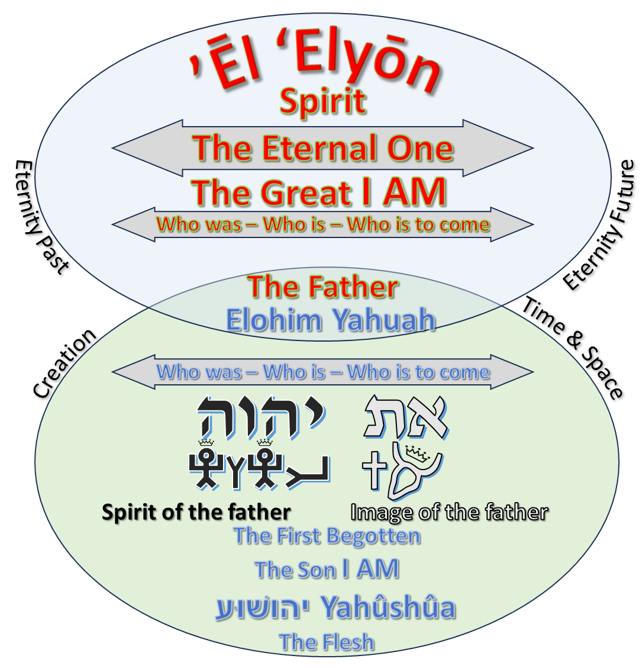
The Sent One and the One Who Sends
Covenant Agency, Shalach, and Echad — Understanding the Father and the Son in the Whole Counsel of Elohim
One Elohim. One Covenant Order. One Sent Son. One Spirit.
Greg Witter | Ephraim’s Cry
Hebraic Mindset Study Series
Study Learn Apply Grow Share Repeat
I was sent a question that deserves a real, text-governed answer. It wasn’t hostile. It wasn’t argumentative. It was sincere. Someone wanted to “get it right,” and the question was essentially this: If the Father and the Son are one, were they distinct during Yahusha’s earthly ministry? Were they “separate” at that time on earth? And if they are “one now,” what does that actually mean?
This question matters because it forces us to choose which authority governs our understanding. If we answer by inherited systems, we will either collapse the Father and the Son into one person and make Scripture incoherent, or split them into two gods and violate Torah. Neither option is permitted by the text. The only faithful answer is one that preserves Torah’s oneness, preserves the clear distinction shown in Scripture, and explains the relationship the way Scripture itself explains it.
The key that unlocks the entire issue is not Greek speculation. It is covenant structure. Scripture has always operated through an ordered pattern of sending, representation, and delegated authority. The Hebrew verb at the center of that pattern is שָׁלַח (shalach). If you understand shalach, the Father/Son question stops being a philosophical riddle and becomes a covenant-government reality.
This teaching will hold to the whole counsel of Elohim in order: Torah first, Prophets second, Writings third, Apostolic witness fourth. That is the only safe way to build doctrine.
TORAH — THE FOUNDATION: ONENESS, ORDER, AND SENDING
We begin where Torah begins: with the non-negotiable confession.
Deuteronomy 6:4 declares that Yahuah is one. That is the roof over everything. The Prophets later reinforce the same truth with force. Isaiah 45:5–6 leaves no room for rival deities. So the first boundary line is established: there is one Elohim; there are no competitors; there is no second deity alongside Yahuah.
That means any answer that produces “two gods” is automatically rejected. Torah forbids it. But Torah also contains another truth that is equally important: Yahuah governs through covenant order, and covenant order includes sending and representation. Yahuah remains the Sovereign, yet He commissions servants, prophets, judges, and appointed representatives who carry His authority into defined domains.
This is where shalach becomes essential.
SHALACH (שָׁלַח) — THE COVENANT ENGINE OF AGENCY
In English, “send” can sound like “deliver a note.” In Hebrew covenant life, shalach is governmental. It is commissioning. It is dispatching with lawful authority. It is sending with an assignment into a defined domain.
Hebrew: שָׁלַח
Letters: Shin (ש) + Lamed (ל) + Chet (ח)
When Yahuah shalach-es, He does not cease to be the Sender. He remains the source of authority. The one sent does not become the Sender in person. Yet the one sent can carry the Sender’s authority in a binding way because the mission originates in the Sender’s will. That is agency. That is covenant governance.
This is why the Apostolic language “the Father sent Me” is not filler. It is not metaphor. It is the covenant mechanism that preserves oneness while maintaining distinction.
Paleo-Hebrew pictograph layer (illustrative, not replacing the Hebrew text):
Shin 𐤔 is commonly associated with teeth, pressing, consuming, applying force. Functionally, it communicates active application—something that accomplishes, acts, and does work.
Lamed 𐤋 is commonly associated with a staff or goad, authority, leadership, instruction. Functionally, it communicates lawful governance and direction.
Chet 𐤇 is commonly associated with a fence or enclosure, boundary, protected space. Functionally, it communicates a defined domain—inside versus outside, a bounded arena where something occurs.
Illustratively, shalach can be pictured as authoritative action (Shin) under lawful governance (Lamed) entering a defined domain (Chet) to accomplish the Sender’s will. That is exactly how Torah presents Yahuah’s operations: He sends a commissioned authority into a bounded situation to confront, deliver, warn, judge, restore, and establish covenant order.
Supporting Torah anchors for the sending pattern:
• Yahuah sends Moses to Pharaoh (Exodus 3:10).
• Yahuah puts words in the mouth of His servant and commands what to speak (Exodus 4:12–16).
• Yahuah sends representatives and assigns them a task within covenant boundaries (Numbers 13:1–3).
Shalach is not small. Shalach is the backbone of covenant administration.
AGENCY: WHY THE SENT ONE CAN BE TREATED AS THE SENDER’S AUTHORITY
Agency is not identity confusion. It is covenant order.
In Torah, the sent representative can be treated as carrying the Sender’s authority because the mission originates in the Sender. When the sent one speaks exactly what the Sender commands, the people are responding to the Sender’s word carried through the representative.
This is why Torah can say things that modern ears misunderstand. When Israel murmurs against Moses, Scripture treats it as murmuring against Yahuah (Exodus 16:8). Moses is not Yahuah. But Moses is the commissioned representative carrying Yahuah’s instruction. Rejecting the commissioned instruction is rejecting the One who commissioned it.
Agency preserves three truths at the same time:
• The Sender remains supreme.
• The sent one remains distinct.
• The authority carried is real and binding.
This is the covenant logic that will later make Yahusha’s “sent” language coherent without breaking Deuteronomy 6:4.
THE NAME BEARING PRINCIPLE: EXODUS 23:20–21
Exodus 23:20–21 is one of the strongest Torah texts showing representation without identity collapse. Yahuah says He will send (shalach) a messenger ahead of Israel and then says, “My Name is in him.”
In Hebrew thought “Name” (shem) is not merely a label. The Name includes reputation, authority, character, covenant standing, governmental claim. To bear the Name is to bear authorized representation.
So when Torah says “My Name is in him,” it is not requiring the messenger to be the same person as Yahuah. It is establishing that the messenger is commissioned with covenant authority, and therefore Israel is accountable to heed the messenger’s instruction because the Sender’s authority stands behind it.
Covenant implications of the “Name in him” principle:
• The Sender’s authority can be vested in a representative.
• The representative’s accuracy matters because the mission is sacred.
• The hearer is accountable because the instruction originates in Yahuah.
• Rejecting the representative becomes rejecting the Sender’s command.
THE PROPHET LIKE MOSES: DEUTERONOMY 18:18–19
Deuteronomy 18:18–19 says Yahuah will raise a prophet and put His words in the prophet’s mouth. The prophet is not Yahuah as the same person, yet the prophet speaks Yahuah’s words, and the people are held accountable to respond to those words.
This is agency again: distinction of person, unity of message, accountability to the Sender.
Torah has already trained the reader: Yahuah’s oneness does not prevent Him from commissioning representatives. It establishes that all authority originates in Him, and representation functions under His rule.
JOSEPH AND PHARAOH: THE MOST PRACTICAL AGENCY BLUEPRINT
Genesis 41 gives one of the clearest human demonstrations of agency.
Pharaoh elevates Joseph and gives him executive authority. Pharaoh gives him the signet ring—legal decree power. Pharaoh publicly establishes Joseph’s rule. Then Pharaoh tells the people, “Go to Joseph” (Genesis 41:55).
Joseph is not Pharaoh. That matters. Yet Joseph’s authority is Pharaoh’s authority operating in the land. The people access Pharaoh’s provision through Joseph because Pharaoh appointed Joseph as the representative administrator.
This is not identity confusion. This is covenant governance in a human system:
• One supreme authority.
• One appointed representative.
• One chain of command.
• One access point for provision and governmental action.
Expanded Joseph pattern anchors:
• Joseph’s authority is granted, not self-generated (Genesis 41:40–41).
• The signet ring signifies lawful decree authority (Genesis 41:42).
• Public honor establishes public accountability (Genesis 41:43).
• “Go to Joseph” establishes access through the appointed representative (Genesis 41:55).
• Representation does not equal identity; it equals delegated authority under the sender.
PROPHETS — THE SENDING REFRAIN AND COVENANT ENFORCEMENT
The Prophets repeatedly emphasize that Yahuah sends His servants. Jeremiah records again and again that Yahuah “sent” His prophets, warning the people, calling them back. The pattern is consistent: sending is mercy before judgment. Sending is covenant enforcement before consequence.
When the people reject the prophets, they are not merely rejecting a man. They are rejecting the Sender’s covenant authority. That is why judgment follows. It is covenant violation.
This shows continuity. The “sending” framework does not begin in the Apostolic writings. It begins in Torah and is enforced by the Prophets. Therefore, when Yahusha describes Himself as “sent,” He is operating inside Torah and Prophets, not outside of them.
Prophetic sending anchors:
• Yahuah sends warnings before judgment.
• Yahuah sends instruction before exile.
• Yahuah sends correction before consequence.
• Rejection of the sent voice is rejection of covenant authority.
• Sending is the consistent pattern of Yahuah’s governance.
WRITINGS — COVENANT WISDOM: GOVERNMENT, ORDER, AND RESPONSIBILITY
The Writings reinforce a simple reality: Yahuah reigns, and His reign is ordered. Obedience is wisdom; rebellion is folly. This matters because agency demands humility. The wise hear and respond rightly to the Sender’s instruction carried through His appointed order.
The Writings also help maintain the invisible/visible distinction without drifting into philosophical systems. Yahuah is above and unseen, yet His rule is seen through His covenant administration in the earth.
APOSTOLIC WITNESS — YAHUSHA AS THE SHALACH-ED ONE
Now we come to the Apostolic witness and read what is written.
Yahusha repeatedly defines Himself as sent by the Father. He does not speak as an independent actor. He speaks as the commissioned representative who carries the Father’s words, performs the Father’s works, and executes the Father’s will.
John 6:38 says He came not to do His own will, but the will of Him who sent Him.
John 7:16 says His teaching is not His own, but belongs to the One who sent Him.
John 5:30 says He can do nothing from Himself; He judges as He hears.
John 8:28–29 says He speaks what He was taught; the Father is with Him.
John 17 is saturated with sending language and mission completion.
This is shalach logic made explicit. The Father is the Sender. The Son is the sent One. The authority originates in the Sender. The sent One executes faithfully.
Apostolic sending anchors:
• The Son is sent; the Father sends (John 6:38; John 17).
• The Son speaks what He receives (John 7:16; John 8:28).
• The Son does what He sees in the Father’s will (John 5:19).
• The Son’s mission is obedience, not independence (John 5:30).
• Sending preserves distinction without violating oneness.
WERE THEY DISTINCT ON EARTH? THE TEXT FORCES THE ANSWER
Matthew 3:16–17 shows Yahusha in the water, the Ruach descending, and the Father speaking from heaven. That is distinction in real time. John 17 shows Yahusha praying to the Father. Luke 22:42 records “not My will, but Yours.” John 16:28 says He came from the Father and returns to the Father. Psalm 110:1, used in Acts 2:32–36, places the Messiah at the right hand.
So yes: during the earthly ministry, Father and Son are distinct in person and role. The Father remains in heaven as Spirit. The Son walks the earth in flesh. The Ruach HaKodesh empowers and testifies.
Distinct does not mean divided. It means ordered.
ECHAD (אֶחָד) — WHAT “ONE” MEANS IN TORAH, AND WHY IT MATTERS HERE
Now we go to the other load-bearing word: echad.
Deuteronomy 6:4 uses echad to declare Yahuah’s oneness. That oneness forbids rival Elohim. But echad, as used across Scripture, can describe unified oneness without erasing distinction of persons or parts within a covenant union. This does not weaken oneness. It uses the word the way Scripture uses it.
Hebrew: אֶחָד
Letters: Aleph (א) + Chet (ח) + Dalet (ד)
Paleo-Hebrew pictograph layer (illustrative, not replacing the Hebrew text):
Aleph 𐤀 is commonly associated with ox/strength/leader/first—headship, primacy, strength.
Chet 𐤇 is boundary/enclosure—defined space, protected domain, separation of inside/outside.
Dalet 𐤃 is door/entry—access point, pathway, the opening through which one enters.
Illustratively, echad can be pictured as headship/strength (Aleph) held within covenant boundaries (Chet) expressed through lawful access (Dalet). This covenant picture fits the access pattern presented in the Apostolic witness: the Father remains supreme, covenant boundaries remain intact, and access is through the appointed “door” reality, which the Apostolic witness applies to Yahusha (John 14:6).
Now we confirm echad usage in Scripture.
Genesis 2:24 uses echad for covenant union in marriage. That oneness does not erase distinction. It establishes covenant unity.
Exodus 26 uses “one” language in the Tabernacle joining—many parts becoming one dwelling.
Ezekiel 37:17 uses echad when two sticks become one in the hand—distinct sticks joined into one prophetic testimony.
Echad anchors:
• Echad establishes oneness and unity without demanding identity collapse in every context.
• Torah oneness forbids rival Elohim; it does not forbid lawful representation.
• Echad’s usage includes covenant unions and joined realities.
• Echad supports unity language while the text preserves Father/Son distinction.
• Echad aligns with covenant order: one authority, one mission, one people, one testimony.
“ONE SPIRIT” AND “ONE FLESH” — CLARIFYING THE CONFUSION
Scripture teaches unity of Spirit and unity of purpose between Father and Son through the Ruach. That does not require philosophical fusion. It requires covenant alignment: the Son perfectly obeys, perfectly represents, perfectly speaks what He receives.
“One flesh” is explicit covenant union language in Genesis 2:24 for marriage. Torah does not define the Father/Son relationship using “one flesh” the way marriage is described. So we affirm the unity Scripture affirms, and we refuse to force a phrase into a meaning Torah does not assign.
The Father and Son are one in unity, one in mission, one in testimony, one in Spirit empowerment, and one in covenant purpose—while remaining distinct in person and role.
RUACH HA KODESH — HOW UNITY OPERATES WITHOUT IDENTITY COLLAPSE
Luke 4:18 says the Spirit of Yahuah is upon Yahusha. Matthew 12:28 ties deliverance to the Spirit of Elohim. John 3:34 speaks of the Spirit given without measure.
This shows how the works and words of Yahusha are not self-originated. They are empowered and authorized. The Spirit testifies, empowers, and binds the mission in power. The Sender commissions, the Spirit empowers, the sent One executes faithfully.
JOHN 1: DAVAR FRAMEWORK — WORD AS EXPRESSION, NOT PHILOSOPHICAL PUZZLE
John 1:1–14 should be read with Hebraic categories. In Hebrew thought, davar is not merely sound. It is decree, expression, action. When Yahuah speaks, creation responds. John’s opening presents Yahusha as the embodied expression of Yahuah’s will and covenant purpose—revealed in flesh, operating under sending language, testifying, executing, revealing.
This aligns with agency: the sent One embodies and delivers the Sender’s word faithfully in human form.
PHILIPPIANS 2 — HUMILIATION AND EXALTATION AS COVENANT ARC
Philippians 2:5–11 gives a covenant arc: humility, obedience, suffering, exaltation, authority. The sent One does not arrive to seize status. He arrives to obey. He humbles Himself, serves, suffers, and is exalted. Exaltation is not self-crowning; it is granted honor and authority. This strengthens agency: authority is bestowed; mission is executed; obedience is proven; then honor is given in order.
REVELATION — ORDERED DISTINCTION WITNESS
Revelation contains statements where Yahusha speaks of “My Elohim” (for example, Revelation 3:12). That language preserves ordered distinction. It does not deny Yahusha’s authority. It preserves covenant structure: the Father as ultimate source, the Son as appointed ruler and representative administrator, the mission accomplished, the kingdom administered.
THE ACCESS POINT: WHY “GO TO THE SON” IS COVENANT ORDER, NOT IDOLATRY
Pharaoh said, “Go to Joseph” because Joseph was the appointed access point to Pharaoh’s provision and government (Genesis 41:55). That did not make Joseph Pharaoh. It made Joseph the representative administrator.
In the same covenant logic, access to the Father is through the One He sent. This is not competition inside Elohim. This is covenant order: the Father commissions the Son as the lawful access point for salvation and covenant administration (John 14:6).
THE FINAL SYNTHESIS
Yes, during Yahusha’s earthly ministry, Father and Son are distinct in person and role. The Father remains in heaven as Spirit. The Son is present on earth in flesh. The Ruach HaKodesh empowers and testifies.
No, this does not create two gods. Torah forbids that.
No, this does not require collapsing everything into “one person theater.” The sending language, the prayer language, the baptism scene, and the ordered authority language do not allow that.
The covenant mechanism that harmonizes all of it is shalach: sending establishes representation. Agency preserves oneness while maintaining distinction. Echad establishes covenant oneness and unified purpose without demanding identity collapse. The whole counsel of Elohim holds together when we let the text speak.
One Elohim.
One covenant government.
One sent Son.
One Spirit empowering and testifying.
One lawful access to the Father through the appointed representative.

#GregWitter, #EphraimsCry, #HebraicMindset, #HebraicMindsetStudySeries, #WholeCounselOfElohim, #Torah, #Prophets, #Writings, #ApostolicWitness, #Yahuah, #Yahusha, #Elohim, #RuachHaKodesh, #Shalach, #Echad, #BiblicalAgency, #CovenantOrder, #JosephPattern, #Genesis41, #Exodus23, #Deuteronomy64, #Deuteronomy18, #John1, #John17, #Philippians2, #Revelation3, #John146
