
Greg Witter | Ephraim’s Cry
Hebraic Mindset Series
Study Lear Apply Grow Share Repeat
The eternal Covenant of Jeremiah 31:31 and Hebrews 8
For those who think that Jerimiah 31:31
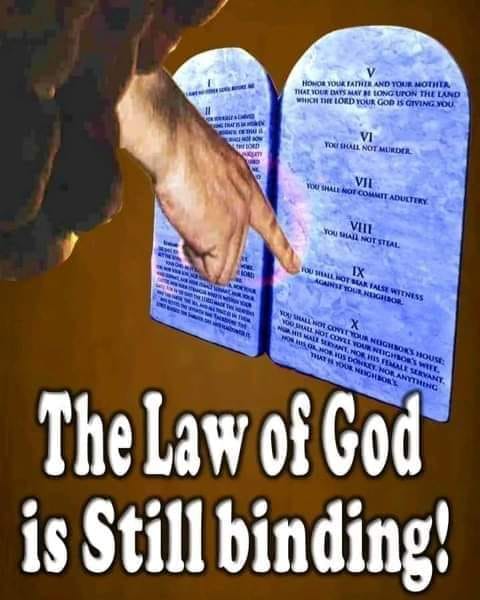
Points to the new covenant the covenant of the new testament and of Jesus christ… you are misled by people who don’t know the Torah you been misled by people who takes Jeremiah out of context. the new covenant? there is no such thing as a “new covenant” the new covenant has always been the old covenant unaltered…
for instance….. when Moses broke the 1st set of tablets.. he didn’t make the new tablets with different set of laws, it was the same laws written on a new sheet of paper (stone)…. there is no new covenant, the old covenant is everlasting Psalm 105:8 1st Chronicles 16:13-18. Jeremiahs quote and quote ” new covenant” is not a replacement of the existing covenant, its a figure of speech expressing new life, new meaning, and new strength of the peoples will to abide by the covenant that they took for granted !!!!!!
The word in Jeremiah 31:31 is chadash or Chodesh.
““See, the days are coming,” declares יהוה, “when I shall make a renewed (H2319 חדשׁ
châdâsh) covenant with the house of Yisra’ěl and with the house of Yehuḏah”, (Jeremiah 31:31, TS2009) see Heb 8:8-12, Heb 10:16-17.”
châdâsh חדשׁ to renew, make anew
to repair, To make something like new through repair, restoration, or replacement.
Fresh new thing, renewed, restored or repaired. Like the first crescent of the moon as the renewal of the moon, the first day of the month.
In Heb 8:7 KJV — For if that first [covenant] had been faultless, then should no place have been sought for the second.
Notice the the word [covenant] is in braces, in the KJV it should be in italic, to indicate the the word covenant is not in the original Greek manuscripts. But was added by the translators or the editors.
Heb 8:13 KJV — In that he saith, A new [covenant], he hath made the first old. Now that which decayeth and waxeth old [is] ready to vanish away.
Notice again the the word [covenant] is in braces, in the KJV it should be in italic, to indicate the the word covenant is not in the original Greek manuscripts. But was added by the translators or the editors.
This changes the context of the verses and the context of the passage.
Hebrews 7 and 8 is about the eternal Priesthood, a better Priesthood of the order of Melchezidec, the Royal Priesthood.
Heb 7:15-17 KJV — And it is yet far more evident: for that after the similitude of Melchisedec there ariseth another priest, Who is made, not after the law of a carnal commandment, but after the power of an endless life. For he testifieth, Thou [art] a priest for ever after the order of Melchisedec.
Heb 7:19-22 KJV — For the law made nothing perfect, but the bringing in of a better hope [did]; by the which we draw nigh unto God. And inasmuch as not without an oath [he was made priest]: (For those priests were made without an oath; but this with an oath by him that said unto him, The Lord sware and will not repent, Thou [art] a priest for ever after the order of Melchisedec:) By so much was Jesus made a surety of a better testament.
Heb 7:24-28 KJV — But this [man], because he continueth ever, hath an unchangeable priesthood. Wherefore he is able also to save them to the uttermost that come unto God by him, seeing he ever liveth to make intercession for them. For such an high priest became us, [who is] holy, harmless, undefiled, separate from sinners, and made higher than the heavens; Who needeth not daily, as those high priests, to offer up sacrifice, first for his own sins, and then for the people’s: for this he did once, when he offered up himself. For the law maketh men high priests which have infirmity; but the word of the oath, which was since the law, [maketh] the Son, who is consecrated for evermore.
Heb 8:6 KJV — But now hath he obtained a more excellent ministry, by how much also he is the mediator of a better covenant, which was established upon better promises.
Heb 8:7 KJV — For if that first (priesthood) had been faultless, then should no place have been sought for the second.
Heb 8:9-12 KJV — Not according to the covenant that I made with their fathers in the day when I took them by the hand to lead them out of the land of Egypt; because they continued not in my covenant, and I regarded them not, saith the Lord. For this [is] the covenant that I will make with the house of Israel after those days, saith the Lord; I will put my laws into their mind, and write them in their hearts: and I will be to them a God, and they shall be to me a people: And they shall not teach every man his neighbour, and every man his brother, saying, Know the Lord: for all shall know me, from the least to the greatest. For I will be merciful to their unrighteousness, and their sins and their iniquities will I remember no more.
Heb 8:13 KJV — In that he saith, A new (priesthood), he hath made the first old. Now that which decayeth and waxeth old [is] ready to vanish away.
Hebrews was written sometime around 55ish to 65ish AD before the temple was destroyed. But the author of Hebrews knew that the Priesthood was dying. And was soon to be gone.
According to rabinic history for “forty years prior to the destruction of the Temple the lot did not come up in the [high priest’s] right hand nor did the tongue of scarlet wool become white…”
With the destruction of the temple in 70AD this implies that this started after Messiah was crucified in 30AD.
The Priesthood was already dying, passing away.
You can argue, debate, deny all you like, it doesn’t change the facts, or the truth.
The covenant didn’t change. It was the Priesthood that changed. And Y’shu’ah HaMashiach became the Eternal High Priest of the order of Melchezidec, the Royal Priesthood. Making the covenant better, stronger and with better promises, signed in his blood.
