
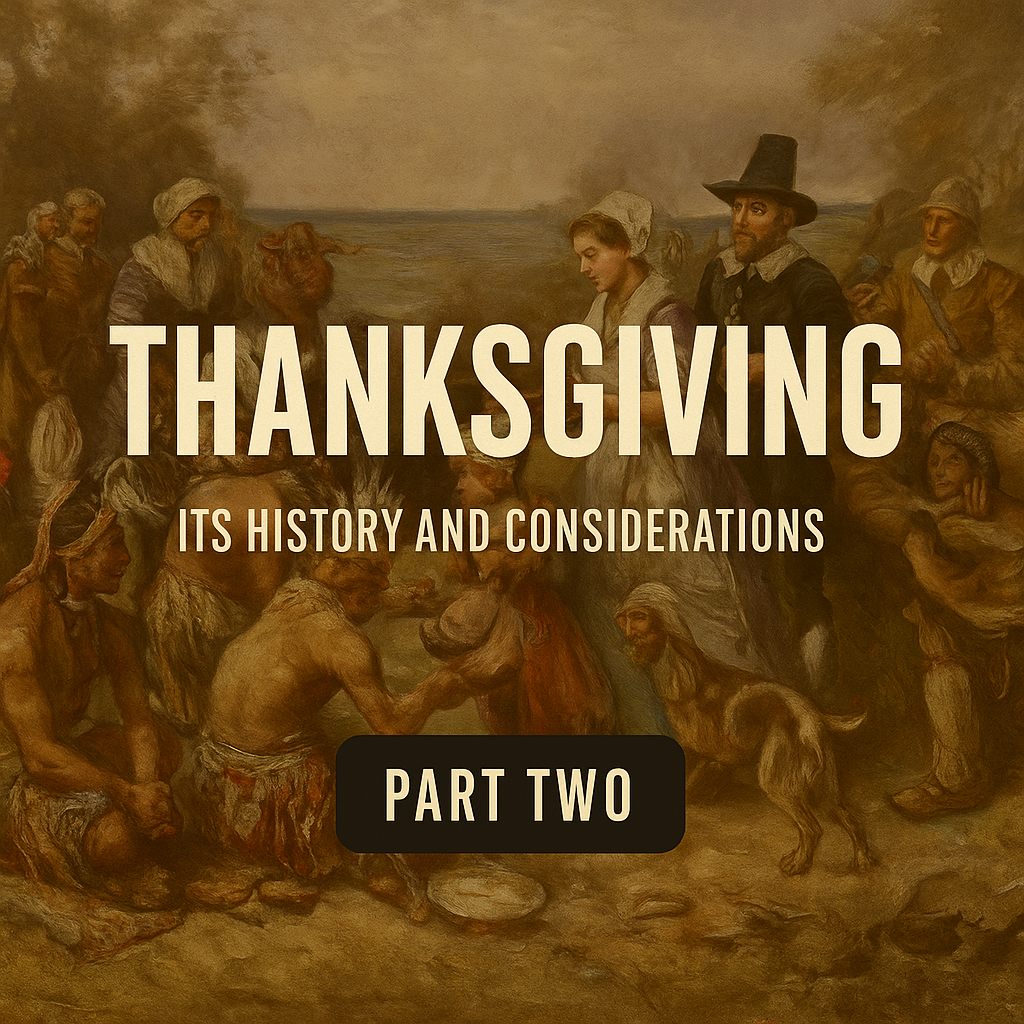
THANKSGIVING: THE TRUTH BEHIND THE FEAST
PART II – THE COUNTERFEIT HARVEST: WHEN GRATITUDE LOST ITS SOURCE
By Greg Witter | Ephraim’s Cry
Hebraic Mindset Study Series
Study • Learn • Apply • Grow • Share • Repeat
I. From Covenant Harvest to Cultural Habit
By the time Thanksgiving had become a permanent fixture in the American calendar, its meaning had already shifted. What was once an instinctive expression of gratitude for survival had turned into an institution shaped by national identity. Over generations, the covenant concept of thanksgiving—rooted in obedience, repentance, and rejoicing before Yahuah—was replaced by a civic expression that spoke of providence yet ignored the Source of provision. The fruit of this transformation was subtle: gratitude remained on the lips, but the covenant disappeared from the heart. What was once a sacred pattern of giving thanks according to Yahuah’s appointed times became a man-made rhythm, detached from Torah, yet cloaked in the language of religion.
II. The Separation of Source and Substance
When thanksgiving is removed from Torah, it ceases to be worship and becomes tradition. The Feast of Booths—Sukkot—was the divinely appointed harvest celebration of Israel. It was the season of joy, the moed that called every household to dwell in booths, rejoice before Yahuah, and remember deliverance from Egypt. It joined remembrance with obedience. But the civil holiday called Thanksgiving joined sentiment with nationalism. Its prayers were generic; its gratitude was undefined. It recognized “God” but not Yahuah, invoked blessing but not covenant, and celebrated abundance without accountability. It was thanksgiving without Torah, and therefore thanksgiving without Truth.
The prophetic pattern repeats throughout history: when the people of Yahuah imitate the customs of nations, they exchange revelation for ritual. The world keeps its feasts to commemorate harvest and victory; Israel keeps hers to honor the Giver of both. The difference is not the meal but the Master.
III. The Loss of Hebraic Meaning
In Hebrew, the word for thanksgiving is todah (תּוֹדָה), meaning a confession, a praise offering, or an act of acknowledgment that flows from obedience. It shares its root with yadah (יָדָה), “to extend the hand,” the same posture of surrender and praise. Thanksgiving in Torah is therefore not an emotion but a sacrificial act. The psalmist declared, “Offer to Elohim thanksgiving, and pay your vows to the Most High.” The offering of thanks was tied to covenant vows. It required truth in the inward parts. Yet in the American holiday, thanksgiving has been reduced to a sentiment—spoken words over a meal, unaccompanied by repentance or obedience. It became a cultural virtue instead of a covenant obligation.
When a nation detaches its gratitude from Torah, it also detaches its morality from the Giver. Gratitude becomes generic; worship becomes optional; and the heart forgets why blessings were given. This is how a civil harvest festival becomes a counterfeit of the true moed. It looks like thanksgiving—it speaks of gratitude—but it is empty of obedience and void of Yahuah’s Name.
IV. The Rise of the Civil Altar
Each generation added a new layer of distance between the Creator and the celebration. By the nineteenth century the altar of Thanksgiving had moved from the temple of worship to the table of the household, and later to the stage of national pride. When presidents began to invoke the day as a symbol of unity, they consecrated it to the state. When merchants realized its power to open the winter economy, they consecrated it to profit. The result was a hybrid—a civil altar draped in religious language. The act of giving thanks had been nationalized, monetized, and neutralized. What Yahuah designed as a continual posture of humility became a seasonal performance of sentimentality.
The pattern parallels ancient Israel’s drift: when Jeroboam instituted his own feast “in the month he had devised in his heart,” the northern kingdom celebrated abundance on a calendar Yahuah had not sanctified. The prophet declared it idolatry because it shifted loyalty from the divine command to the will of man. America’s Thanksgiving, though outwardly harmless, follows the same spirit of replacement—an invented feast in a month devised in the heart of kings and congresses.
V. The Modern Condition — Gratitude Without Obedience
Today, Thanksgiving is often spoken of as a “day of gratitude.” Yet true gratitude cannot exist without submission. People thank one another for kindness or success, but few thank the One who gives breath and rain. Families bow their heads and mutter rehearsed prayers, but the culture spends the next day trampling strangers for sales. Gratitude has been severed from holiness. The fruit of this disconnect is visible everywhere: abundance without peace, food without contentment, comfort without conviction. Yahuah’s blessing has been taken for granted, and the civil feast stands as a yearly reminder of how far the nation has drifted from covenant.
VI. The Scriptural Witness Against Mixture
Throughout Scripture, Yahuah warns against blending the sacred and the profane. He told Yisra’el, “You shall not do as they do in the land of Mitsrayim, nor as they do in the land of Kena’an.” When men create their own feasts, they create their own theology. The prophet Amos condemned Israel’s counterfeit worship, saying, “I hate, I despise your festivals; I take no delight in your assemblies.” Why? Because they offered thanksgiving without righteousness. The outward celebration continued while justice and obedience vanished. The same indictment applies to any people who hold a feast in His Name yet disregard His Word.
The Writings echo this warning. In Tehillim 106, Israel forgot Yahuah their Savior and “made a calf in Horeb.” They offered sacrifices of joy to the image of their own making. In the Apostolic Writings, Sha’ul (Paul) described a future generation that would be “lovers of pleasure rather than lovers of Elohim—having a form of reverence but denying its power.” A civil Thanksgiving fits that pattern precisely: reverence without revelation, gratitude without transformation.
VII. The Heart of the Counterfeit
The counterfeit of Thanksgiving is not the food, the family, or the fellowship; it is the replacement of obedience with tradition. The feast itself is neutral—it can be redeemed if the heart is right—but the deception lies in believing that a national holiday can substitute for covenant obedience. True thanksgiving demands order, offering, and obedience. False thanksgiving requires none of these; it only requires attendance. That is why the remnant must discern the spirit of the day. A counterfeit always looks similar to the original but is stamped with the authority of man, not the seal of Yahuah.
VIII. The Call to Discernment
The remnant of Yahuah cannot live by calendar convenience; we live by covenant command. We are not bound to reject gratitude, but we must reject mixture. To gather with family and give thanks is not sin; to sanctify what Yahuah did not appoint is deception. The question is not whether we eat the meal but whether we exalt the Maker. For those called out from Babylon’s system, discernment is not about condemnation—it is about consecration.
Every believer must seek the guidance of the Ruach ha’Qodesh in deciding how to walk this out. Some may withdraw entirely from the civil holiday; others may attend family gatherings but refuse to call it holy. The key is to stand in truth without arrogance, to witness without compromise, and to let obedience define the boundaries of participation. What matters most is that our gratitude flows from covenant, not culture.
IX. A Prophetic Foreshadowing
As nations move toward the final confrontation of kingdoms, every calendar will reveal its allegiance. The Beast system will establish its own appointed times, feasts of unity and peace designed to replace Yahuah’s moedim. The civil Thanksgiving is an early rehearsal of that spirit—an annual gathering that celebrates abundance apart from the Giver. It teaches people to be thankful without being holy. But the remnant must declare the opposite: holiness first, and gratitude flowing from it.
The Word of Yahuah says, “In everything give thanks, for this is the desire of Elohim in Messiah Yahusha concerning you.” This command is not limited to a single day; it is the posture of a redeemed life. The world keeps its feast once a year; the covenant people live it every day.
X. Conclusion — Recovering the Source
To reclaim thanksgiving is to return to the Source. The counterfeit harvest can only be exposed by restoring the true one. The Feast of Sukkot remains the divine pattern—a harvest of joy, a memorial of deliverance, and a prophetic rehearsal of the Kingdom to come. When gratitude returns to covenant, it regains power. When obedience returns to worship, thanksgiving becomes holy again.
The remnant is not called to hate the nation or despise its customs but to stand apart from its deception. Offer thanks to Yahuah daily; honor His appointed times; teach your children the difference between tradition and truth. Let the counterfeit be exposed by the light of obedience, and let your life become the living thanksgiving He desires.
“Enter His gates with thanksgiving, His courts with praise; give thanks to Him, bless His Name. For Yahuah is good; His kindness is everlasting, and His truth endures to all generations.” — Tehillim 100:4–5 (TS2009)
#EphraimsCry, #HebraicMindsetStudySeries, #GregWitter, #ThanksgivingTheTruthBehindTheFeast, #TheCounterfeitHarvest, #WhenGratitudeLostItsSource, #CovenantHarvest, #CounterfeitFeast, #ThanksgivingExposed, #GratitudeAndObedience, #ReturnToTheSource, #TorahTruth, #RemnantAwakening, #NoMixture, #WatchmanOnTheWall, #SetApartLife
