
BEFORE TIME: UNDERSTANDING THE ETERNAL YAHUAH
By Greg Witter | Ephraim’s Cry
Hebraic Mindset Study Series
Study • Learn • Apply • Grow • Share • Repeat
I. Before “Bereshith”: The Mystery of the One Who Simply Is
Before the first tick of a clock, before light split the darkness, before “beginning” was even a thing, there is only Yahuah—self-existent, self-defining, unbounded by created measures. “Time” is a creature, not a cage for the Creator. The created realm runs on days, months, appointed times, and years; Yahuah is the One from whom those measures proceed. He is not “in” the timeline; the timeline is in His hand.
To call Him merely “God” or “Lord” is to strip covenant identity and flatten the revelation. Those are titles, generic labels used for many beings in the nations. Yahuah is the Name—His covenant revelation to His people, the marker of identity, fidelity, and relationship. Names matter in Scripture because names carry mission, character, and authority. Titles can be swapped or misapplied; the Name binds covenant.
“Before time” is not empty space; it is the fullness of Yahuah’s counsel. From His eternal counsel flows purpose, order, redemption, and the entire prophetic spine of history. When the text opens with Bereshith bara Elohim—“In the beginning Elohim created”—that very “beginning” is an act of creation. Yahuah is eternal; the “beginning” is not.
II. The Name: Covenant Identity, Not a Generic Label
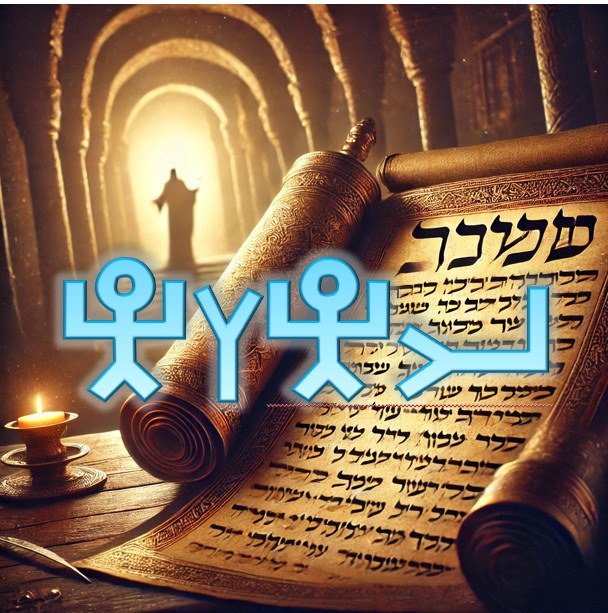
The Name Yahuah (יהוה) is His self-disclosure to the covenant people. He is the One “who was, and who is, and who is to come.” The revelation to Mosheh anchors this: Ehyeh Asher Ehyeh—“I Am that I Am” (Shemoth (Exodus) 3:14). He is Being itself, the fountain of existence, the sustainer of all that is. The removal of His Name from translations and its replacement with titles veils the covenant. Restoring the Name restores the covenant relationship, the fear of His greatness, and the clarity of His authority.
Yahusha (יהושע) is “Yahuah is salvation.” Not a new deity, not a second “god,” but the living Word and faithful Image of the invisible Elohim, the embodiment of Yahuah’s saving purpose within time. The Name of the Son carries the Name of the Father because the mission is the Father’s—revealed in the Son, sealed by the Ruach.
III. Eternity and the Birth of Time
Time is a tool Yahuah fashioned to govern creatures. He set the luminaries on Day Four to rule the day and the night and to mark mo’edim—appointed times (Bereshith (Genesis) 1:14–18). The feast cycle isn’t religious decoration; it is the calendar of redemption. But hear this plainly: the lights were installed within time; Yahuah stands outside it. From everlasting to everlasting, He is El. His being does not advance from moment to moment; our lives do.
This dissolves the modern error that tries to measure the Eternal One on a created clock. The prophetic timeline is real, but it is derivative—an instrument in the hand of the Eternal. The Sabbath pattern, the Shemitah cycles, the Jubilee release—these are all Yahuah’s ways of teaching time-bound creatures the rhythm of His kingdom.
IV. The Eternal Counsel: Redemption Purposed “Before”
The cross was not a last-minute patch. The Lamb is “slain from the foundation of the world” (Ḥazon (Revelation) 13:8). The grace that saves us was given “before time began” (2 Timothy 1:9). That means the entire redemptive arc—promise, incarnation, obedience, offering, resurrection, enthronement, and return—was purposed in the counsel of Yahuah prior to Bereshith. The Covenant precedes the cosmos. History reveals what eternity resolved.
This is why hope is unshakable. The outcome (kingdom restored, enemies subdued, creation liberated) is not a gamble; it is the manifestation of an eternal decree. The remnant’s endurance is agreement with an already-settled word.
V. The Word, Wisdom, and the King in the Counsel
“In the beginning was the Word”—not a poetic flourish but a theological earthquake. The Word is with Elohim and is Elohim (Yoḥanan (John) 1:1–3). All things come to be through Him. When Wisdom speaks in Mishlei (Proverbs) 8, pre-creation delight is described—the delight of Yahuah in His works and the delight of Wisdom with the sons of men. The Apostolic Writings identify Yahusha with this pre-existent Word: the exact representation of Yahuah’s being (Ivrim (Hebrews) 1:1–3), by whom all things hold together (Qolosim (Colossians) 1:15–17).
So when we speak of “before time,” we are not speaking of emptiness but of presence—the presence of Yahuah, the counsel of His will, the Word who will tabernacle among us, the Spirit moving to bring form and fullness at the appointed moment.
VI. The Restoration of the Name: Recovering Covenant Clarity
Replacing the Name with “God” or “Lord” blurs lines Yahuah drew in blood and fire. The prophets call, “Make His Name known.” The psalmist ties trust directly to knowing the Name. The priests bless in the Name. The covenant is cut and remembered by the Name. When the Name is obscured, a counterfeit system can more easily swap in traditions, calendars, and allegiances. Restoring the Name is not about semantics; it is about allegiance, authority, and obedience.
This restoration work is part of the remnant’s calling in the final hours: to sanctify the Name Yahuah in our hearts, our assemblies, and our proclamations—refusing the generic labels that emptied the Scriptures of their covenant particularity.
VII. Theological Guardrails: What “Before Time” Does and Does Not Mean
-
It does not mean Yahuah waited in a temporal sense; eternity is not a long time.
-
It does not reduce Yahusha to a created being; He is before all things and through Him all things exist.
-
It does not authorize philosophical speculation detached from Scripture; the Four Witnesses anchor the doctrine.
-
It does mean that creation, covenant, and consummation were purposed by Yahuah’s will and will arrive on Yahuah’s clock.
-
It does require us to worship with fear and rejoice with trembling, because the One who authored time will also end the present age and inaugurate the everlasting kingdom.
VIII. Documentation & Foundations (Four Witnesses with Commentary)
TORAH
-
Bereshith (Genesis) 1:1–5, 14–18 — “In the beginning” is itself the created start line; luminaries are placed to govern days, years, and mo’edim. This proves time is a created framework and that covenant timekeeping (feasts) is embedded in creation design.
-
Shemoth (Exodus) 3:13–15 — Yahuah reveals His Name to Mosheh: Ehyeh Asher Ehyeh → Yahuah. The covenant memorial “to all generations.” This anchors the Name as the proper covenant term; titles are insufficient.
-
Shemoth (Exodus) 31:12–17 — The Sabbath is an eternal sign between Yahuah and His people. Time itself becomes a covenant medium; eternity stamps its seal on the weekly rhythm.
-
Devariym (Deuteronomy) 32:39–40 — Yahuah swears by Himself—He alone is the living Elohim, sovereign over life and death. Oath “as I live forever” reveals eternity as Yahuah’s own life, not a duration outside Him.
PROPHETS (NEVI’IM)
-
Yeshayahu (Isaiah) 40:28 — The Everlasting El, Creator, does not faint nor grow weary. Eternity here is tied to uncreated strength; He is before and beyond the cosmos He formed.
-
Yeshayahu (Isaiah) 44:6–8; 46:9–10 — “I am the First and I am the Last… declaring the end from the beginning.” Yahuah’s eternity is the ground of prophecy: He speaks from outside the timeline and brings it to pass within it.
-
Miḵah (Micah) 5:2 — The Ruler from Beth Leḥem has “goings forth from of old, from everlasting.” Messianic pre-existence is declared in the Prophets, tying the King’s mission to eternity.
-
Mal’akhi (Malachi) 3:6 — “I, Yahuah, do not change.” Immutability is a corollary of eternity; change belongs to creatures, not to the Creator.
WRITINGS (KETUVIM)
-
Tehillim (Psalm) 90:2 — “From everlasting to everlasting, You are El.” Before the mountains and the earth, He is. Creation has a start; Yahuah does not.
-
Tehillim (Psalm) 102:25–27 — He laid the foundation of the earth; they will perish, but He remains. The creation ages; Yahuah does not.
-
Mishlei (Proverbs) 8:22–31 — Pre-creation delight of Wisdom in Yahuah’s presence and in the sons of men. This anticipates the Apostolic revelation of the pre-existent Word through whom all was made.
APOSTOLIC WRITINGS
-
Yoḥanan (John) 1:1–3, 14 — The Word is with Elohim and is Elohim; all things come to be through Him; the Word became flesh. Eternity enters time without ceasing to be eternal.
-
Qolosim (Colossians) 1:15–20 — By Him all things were created, in heaven and on earth; He is before all things, and in Him all things hold together. Pre-eminence is rooted in pre-existence and creative agency.
-
Ivrim (Hebrews) 1:1–3, 10–12; 13:8 — The Son is the exact representation; He laid the foundation of the earth; He is the same yesterday, today, and forever. Eternity and immutability meet in the Son.
-
2 Timothy 1:9; Titos (Titus) 1:2 — Grace and promise given “before time began.” The plan of salvation is older than the clock.
-
Ḥazon (Revelation) 13:8; 22:13 — Lamb slain from the foundation; “I am the Aleph and the Tav.” Beginning and End language ties our King to the eternal identity of Yahuah.
IX. Apologetics & Debate Kit (Concise Points for Controversy)
-
Name vs. Title: Scripture commands memorializing the Name Yahuah across generations; titles are never commanded as covenant memorials.
-
Eternity ≠ Long Time: Eternity belongs to Yahuah’s being; “before time” speaks to Creator–creature distinction, not a duration He travels through.
-
Messiah’s Pre-Existence: The Prophets and Apostolic Writings unite: the Coming One’s “goings forth are from everlasting,” and by Him all things were made. Denying this fractures the Four Witnesses.
-
Prophecy’s Ground: Only an Eternal One can “declare the end from the beginning.” Predictive prophecy presupposes Yahuah’s transcendence over time.
-
Feasts and Time: Mo’edim are installed within time to train us in covenant rhythm. They do not bind Yahuah; they shape us to His order.
X. Call to Consecration: Sanctify the Name, Align Your Time
If the Eternal One authored time, then every hour is held in trust. The remnant sanctifies the Name Yahuah, orders life by the mo’edim, and walks in faithful allegiance to the King whose goings forth are from everlasting. We refuse the generic labels of religion and return to the covenant identity of Scripture. We fear His Name, keep His Sabbaths, and await the consummation purposed before the world began—confident because the decree is older than the dust under our feet.
(Additive) Reference Index (for your study file)
-
On the Name as covenant memorial: Shemoth (Exodus) 3:15; Bamidbar (Numbers) 6:27; Tehillim (Psalm) 9:10; 83:18; Mishlei (Proverbs) 18:10.
-
On Eternity/Immutability: Tehillim (Psalm) 90:2; 102:25–27; Mal’akhi (Malachi) 3:6; Ivrim (Hebrews) 13:8.
-
On Word/Wisdom Pre-existence: Mishlei (Proverbs) 8:22–31; Yoḥanan (John) 1:1–3; Qolosim (Colossians) 1:15–17; Ivrim (Hebrews) 1:1–3.
-
On Decree before Time: 2 Timothy 1:9; Titos (Titus) 1:2; Ḥazon (Revelation) 13:8.
-
On Prophetic Transcendence: Yeshayahu (Isaiah) 44:6–8; 46:9–10; Miḵah (Micah) 5:2.
-
On Time as Created Medium: Bereshith (Genesis) 1:1–5, 14–18; Shemoth (Exodus) 31:12–17.
Hashtags
#EphraimsCry #GregWitter #HebraicMindsetStudySeries #Remnant #HebraicMindset #Messianic #HebrewRoots #TorahPursuant #Ekklesia #Watchmen #Seekers #SetApart #CommandmentKeepers #NameOfYahuah #Covenant #BeforeTime #EternalKing #Moedim #FourWitnesses #YahushaIsKing
